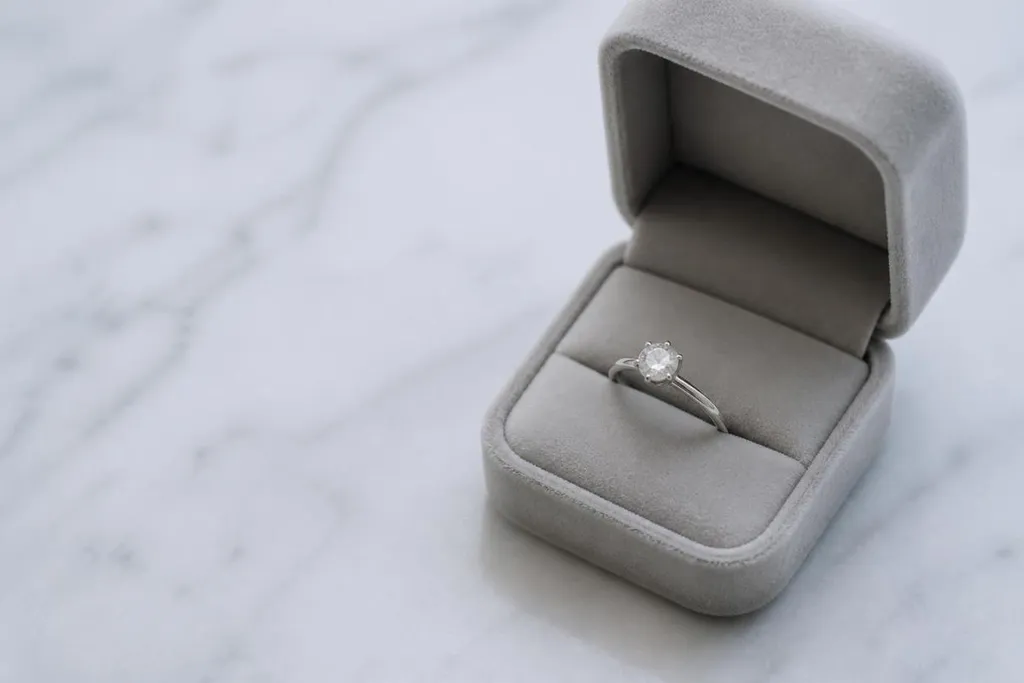
One carat has long been a familiar reference point in engagement jewellery, but its appeal is not simply tied to reaching a particular number. A well-proportioned one-carat lab-grown diamond can offer noticeable presence while leaving enough visual space for the cut, setting and band to contribute to the overall design. The result can feel substantial without becoming difficult to wear every day.
For couples comparing certified 1 carat engagement rings, it helps to look beyond carat weight and consider what that weight actually produces on the hand. Shape, face-up dimensions, cut quality and setting style can make two one-carat lab diamond rings look surprisingly different. Certification provides useful information about the stone, but the finished ring still needs to work as a complete piece of jewellery.
One Carat Does Not Have One Fixed Appearance
Carat measures weight, not diameter or visible surface area. This means every one-carat diamond will not appear exactly the same size once viewed from above.
A diamond's proportions determine how its weight is distributed between width, length and depth. A stone carrying more weight through its depth may show less surface area than another diamond of the same carat weight with different proportions.
Shape changes the impression further. A round brilliant provides a compact, symmetrical outline, while an oval distributes its weight lengthways and can create greater visual coverage along the finger. Pear and marquise shapes can produce a similar lengthening effect. Cushion and princess cuts tend to create a fuller presence, while emerald cuts use clean geometry to establish their character.
For this reason, millimetre measurements are valuable alongside the one-carat figure. They give a clearer idea of how much of the diamond will actually be visible.
Certification Helps You Compare Quality
Certification is useful because it provides an independent assessment of important diamond characteristics. Depending on the grading laboratory and report, buyers can review factors such as carat weight, colour, clarity, measurements and other relevant information.
These details make comparisons more structured, but they should not become a competition to obtain the highest possible grades.
For example, paying for an extremely high clarity grade may offer limited visual benefit if a slightly lower-graded diamond already appears clean to the unaided eye. Likewise, colour should be considered alongside the metal. A diamond that looks beautifully white in yellow or rose gold may not require the same colour grade someone prefers for a platinum setting.
Cut and proportions deserve particular attention because they have a strong influence on how lively the diamond appears.
The certificate is therefore best treated as evidence supporting the buying decision, not as a substitute for evaluating the stone itself.
Let the Setting Decide How Prominent One Carat Feels
Setting design can dramatically change the visual presence of a one-carat centre diamond.
A solitaire places all attention on the stone. Pairing it with a fine band can create contrast that makes the diamond appear particularly prominent while keeping the overall ring restrained.
Diamond-set shoulders add sparkle across the finger without substantially changing the centre stone's outline. A halo produces a broader effect by surrounding the one-carat diamond with smaller stones, making the complete composition occupy more visual space.
A trilogy setting creates width in another way. Rather than framing the centre completely, side stones extend the design horizontally and can give a one-carat centre diamond a more substantial overall presence.
These choices explain why a smaller centre stone in a detailed setting may sometimes feel more visually significant than a larger diamond in a very simple design.
Balance Size With Everyday Practicality
A one-carat lab diamond can be particularly versatile for everyday wear because it offers presence without necessarily requiring a high or heavy setting.
Someone with an active routine may prefer a lower-profile design that catches less frequently on clothing. Others may choose a more elevated setting because they enjoy the prominence it gives the centre diamond or want particular options for pairing a wedding band.
Band width also matters. Very fine bands emphasise the stone by contrast, while slightly broader bands create a more substantial and balanced appearance.
Metal completes the design. Platinum and white gold provide a crisp, cool backdrop, while yellow gold introduces warmth and stronger contrast. Rose gold offers a softer interpretation.
Final Thought
A one-carat engagement ring works best when the carat figure is treated as the beginning of the decision rather than the objective itself. Shape, dimensions, cut quality and setting can all change how that one carat appears and feels.
By using certification to understand the diamond and visual judgement to assess the finished design, buyers can find a one-carat lab diamond ring that balances presence, detail and everyday practicality qualities that matter far more over time than a number on a grading report.