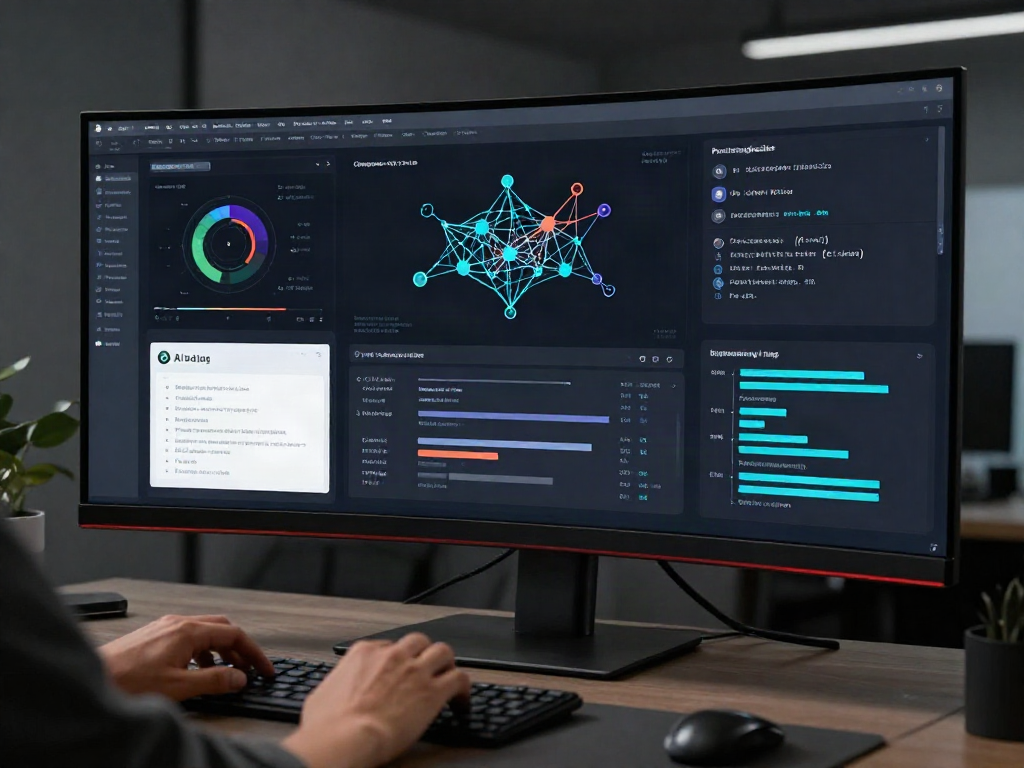
1. Introduction to Ai agents
In recent years, the emergence of Ai agents has captivated the attention of both technologists and business leaders. These intelligent systems are designed to perceive their environments, make autonomous decisions, and interact effectively with human users. As technology continues to advance, understanding Ai agents has become essential for leveraging their potential across various sectors.
1.1 Definition and Key Characteristics
An Ai agent can be defined as a software entity that perceives its surroundings, processes the information, and takes action to achieve specific goals. This definition encompasses several key characteristics:
- Autonomy: Ai agents operate independently, making decisions based on data without human intervention.
- Perception: They can gather information through various inputs, such as sensors, APIs, and user interactions.
- Learning Capability: Many Ai agents can employ machine learning algorithms, allowing them to improve their performance over time based on experience.
- Goal-oriented: They are designed to achieve specific objectives, whether optimizing workflows, enhancing customer service, or facilitating decision-making.
1.2 Evolution of Ai agents Over Time
The concept of Ai agents has evolved significantly since its origins in the 1950s. Early implementations focused on basic task automation. Over the decades, advancements in machine learning, natural language processing, and computing power have transformed Ai agents into sophisticated systems capable of handling complex tasks. Recent breakthroughs in deep learning have further enhanced the capabilities of Ai agents, allowing them to understand context and intent better.
1.3 Importance of Ai agents in Today's World
Today, Ai agents are not just a trend but a necessity across various sectors. They streamline operations, drive efficiency, and enhance productivity. Businesses are actively integrating them into their processes to gain competitive advantages. From virtual assistants in customer service to predictive analytics in healthcare, the applications are diverse. Understanding and implementing Ai agents is crucial for organizations aiming to thrive in an increasingly digital environment.
2. How Ai agents Function
Understanding how Ai agents operate provides insights into their potential applications and limitations. They employ a series of processes, primarily rooted in artificial intelligence and machine learning, to perform their functionalities effectively.
2.1 Analyzing Decision-Making Processes of Ai agents
At the core of Ai agents lies their decision-making process, which typically involves several stages:
- Data Collection: They gather data from various sources to inform their actions, whether from user input, environmental sensors, or databases.
- Contextual Analysis: Analyzing data in context helps Ai agents understand the implications of different scenarios.
- Prediction: Utilizing algorithms, they predict potential outcomes of different actions.
- Action Implementation: They execute the action determined to be the most effective towards achieving the desired goal.
2.2 Types of Tasks Performed by Ai agents
Ai agents are versatile and can perform a range of tasks tailored to different domains:
- Automation: They can automate repetitive tasks, freeing human workers to focus on more strategic functions.
- Personalization: In customers' interactions, they can tailor experiences based on user data and preferences.
- Data Analysis: Ai agents can process and analyze large datasets at unprecedented speeds, offering insights quickly.
- Customer Interaction: Many Ai agents serve as chatbots, handling inquiries and providing support autonomously.
2.3 Leveraging Machine Learning in Ai agents
Machine learning is integral to the functionality of Ai agents, allowing them to adapt to new information and improve over time. Here are key aspects:
- Training Data: Ai agents learn from historical data to identify patterns and make predictions.
- Feedback Loops: Continuous feedback from users allows Ai agents to refine their processes and enhance their accuracy.
- Transfer Learning: By utilizing knowledge from one domain, Ai agents can apply it to different yet related tasks, further enhancing their utility.
3. Applications of Ai agents Across Industries
The versatility of Ai agents allows them to be integrated into numerous sectors, each benefiting from tailored solutions.
3.1 Use Cases in Customer Service
Customer service is one of the most prominent areas where Ai agents have made a significant impact. Various companies deploy chatbots powered by Ai to:
- Respond to frequently asked questions almost instantaneously
- Guide customers through troubleshooting processes
- Collect customer feedback to improve services
This efficiency not only enhances customer satisfaction but also reduces operational costs significantly.
3.2 Integration of Ai agents in Healthcare
The healthcare industry has embraced Ai agents to improve patient outcomes. Some applications include:
- Diagnostic Assistance: Ai agents can analyze patient symptoms and suggest possible diagnoses.
- Remote Monitoring: They can monitor patients remotely, alerting healthcare providers of any anomalies in real time.
- Personalized Medicine: Using patient data, Ai agents help tailor treatments specific to individual needs and genetics.
3.3 Revolutionizing Logistics with Ai agents
In logistics, Ai agents optimize supply chain operations by:
- Route Optimization: Utilizing real-time traffic data, Ai agents determine the most efficient delivery routes.
- Inventory Management: They forecast demand, ensuring that stock levels align with customer needs, thus minimizing waste.
- Predictive Maintenance: By analyzing equipment data, Ai agents can predict failures, scheduling maintenance before breakdowns occur.
4. Challenges and Considerations
Despite their numerous advantages, integrating Ai agents into business practices presents specific challenges that organizations must navigate.
4.1 Ethical Implications of Implementing Ai agents
Ethical considerations are paramount when deploying Ai agents. Issues such as bias in training data, lack of transparency in decision-making, and accountability for actions taken by Ai agents need to be rigorously addressed. Organizations must proactively develop ethical guidelines to govern Ai usage, ensuring equitable and responsible practices.
4.2 Security Risks and Data Privacy
As Ai agents often handle sensitive information, data security is a critical concern. Potential vulnerabilities can arise from improperly configured systems or insufficient data protection protocols. Companies must implement strong security measures, including encryption, access controls, and regular audits, to mitigate risks.
4.3 Overcoming Common Misconceptions about Ai agents
There are several misconceptions about Ai agents that can hinder their adoption, such as:
- Ai agents replace human workers: In reality, they augment human capabilities, allowing workers to focus on more creative tasks.
- Ai agents are infallible: While advanced, Ai agents are still prone to errors and require human oversight.
Clear communication and education about the true capabilities and limitations of Ai agents can help organizations leverage their advantages effectively.
5. The Future of Ai agents in Business
Looking ahead, the trajectory of Ai agents suggests that their significance in business will only continue to grow as technology advances.
5.1 Potential Developments in Ai agents Technology
Future enhancements in Ai agents are likely to include more advanced natural language processing capabilities, improved interaction modalities (e.g., voice and visual interfaces), and greater integration with edge computing solutions, facilitating real-time data processing.
5.2 Impact on Workforce Dynamics
The evolution of Ai agents will profoundly impact workforce dynamics. While some traditional roles may diminish, new job categories will likely emerge, focused on supervising, maintaining, and training Ai systems. Organizations must prepare by investing in reskilling initiatives for their workforce.
5.3 Strategic Planning for Ai agents Adoption
Successful adoption of Ai agents entails strategic planning that encompasses:
- Identifying Objectives: Clearly define the goals for implementing Ai agents.
- Change Management: Foster a culture that embraces technological change to ease transitions.
- Continuous Evaluation: Regularly assess the performance and impact of Ai agents to ensure alignment with business goals.
FAQs about Ai agents
What are Ai agents?
Ai agents are autonomous software solutions designed to execute tasks, make decisions, and interact intelligently with surroundings, optimizing processes across various industries.
How do Ai agents learn?
They learn through data analysis, identifying patterns using machine learning techniques, which allows them to refine their processes and improve performance over time.
What industries can benefit from Ai agents?
Industries such as customer service, healthcare, finance, and logistics can benefit significantly by enhancing efficiency, accuracy, and customer experiences through Ai agents.
Are Ai agents replacing human jobs?
While Ai agents automate certain tasks, they primarily serve to augment human capabilities, allowing workers to focus on more strategic, creative, and complex roles.
What ethical concerns surround Ai agents?
Concerns include bias in decision-making, data privacy issues, and accountability for actions taken by Ai agents, highlighting the need for ethical frameworks guiding their implementation.