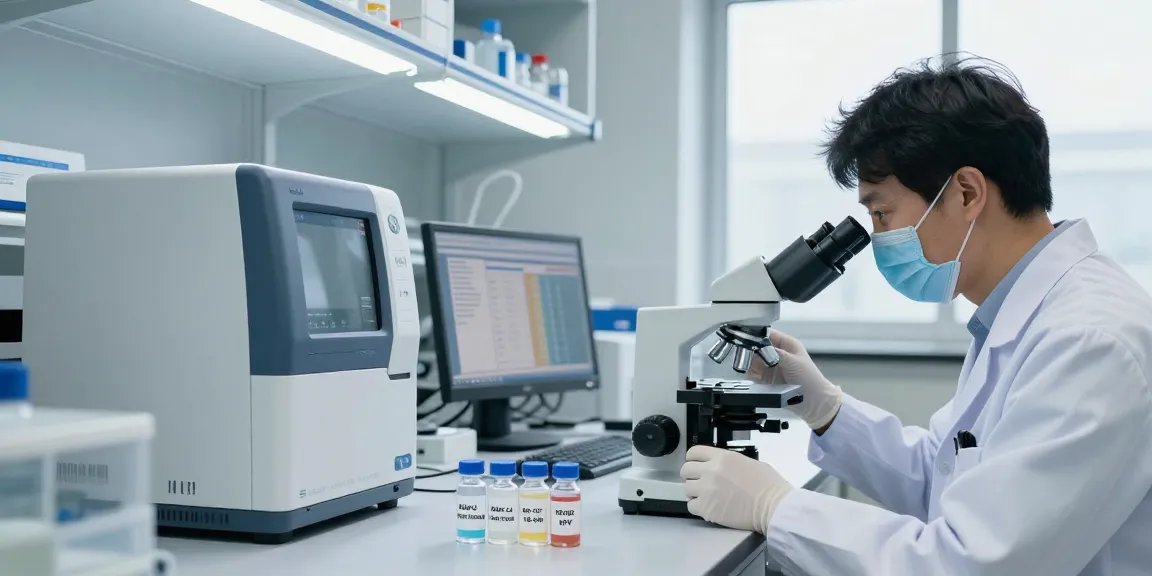
Understanding the Research Peptide Stack Landscape
As the field of laboratory research continues to evolve, the importance of multi-peptide formulations becomes increasingly evident. Among these innovations, the Klow Peptide Stack, introduced by Koi Peptides in 2026, stands out as a significant advancement in research materials. Comprising four distinguished peptides—GHK-Cu, BPC-157, TB-500, and KPV—this stack is designed specifically for laboratory use. The precise documentation and traceability provided with each batch underline the commitment to quality and reliability, essential features for researchers. When exploring options, research peptide stack offerings ensure comprehensive insights into the products available for experimental use.
What is a Research Peptide Stack?
A research peptide stack refers to a combination of peptides utilized in scientific studies to investigate their interactions, effects, and potential applications in various biological contexts. This stacking method allows researchers to examine how multiple peptides work synergistically within a controlled environment. The Klow Peptide Stack exemplifies this concept by offering a carefully curated blend of peptides that have been individually analyzed for their identity and purity, providing a unified resource for experimental design.
Importance of Multi-Peptide Formulations in Laboratories
Multi-peptide formulations like the Klow Peptide Stack offer several advantages in laboratory research. One significant benefit is the ability to study complex biological interactions more effectively. Instead of examining each peptide individually, researchers can explore how these compounds interact when combined. Moreover, such stacks can save time and resources by reducing the need for multiple individual purchases.
Additionally, these formulations may provide enhanced effects that single peptides cannot achieve alone. For instance, combining GHK-Cu, which is known for its wound healing properties, with BPC-157 and TB-500, recognized for their healing and recovery benefits, allows researchers to study a broader spectrum of biological responses in their experiments.
Overview of Klow Peptide Stack Components
The Klow Peptide Stack's unique blend includes:
- GHK-Cu: This copper-binding tripeptide is renowned for its role in wound healing and skin repair processes, making it a valuable component in regenerative medicine research.
- BPC-157: A synthetic pentadecapeptide, BPC-157 has been identified in studies for its regenerative properties and its potential to promote healing in various tissues.
- TB-500: Related to the thymosin beta-4 protein, TB-500 is commonly associated with tissue regeneration and recovery, often appearing in discussions of performance enhancement.
- KPV: A tripeptide that enhances the overall efficacy of the Klow Peptide Stack, KPV is often noted for its anti-inflammatory properties.
Quality Assurance in Research Peptides
Quality assurance is paramount in peptide research, particularly when using complex stacks like Klow. Each lot of the Klow Peptide Stack undergoes rigorous testing to ensure purity and identity, reducing the risk of variability that can affect research outcomes.
Certificates of Analysis: Ensuring Traceability
Every batch of the Klow Peptide Stack is accompanied by a Certificate of Analysis (COA), which provides critical information about the peptide's identity and purity levels. The COA serves as a key document that researchers can reference to verify that the peptides they are working with meet the qualitative standards necessary for their experiments. This transparency is vital for reproducibility and reliability in research.
HPLC and Mass Spectrometry: Quality Control Measures
Koi Peptides employs high-performance liquid chromatography (HPLC) as a standard procedure to analyze the purity of the Klow Peptide Stack. HPLC allows for the effective separation and analysis of peptide components, ensuring that the intended peptides are present in the correct concentrations. The purity values obtained from HPLC are recorded and reported based on peak area percentages, contributing to the overall quality assessment.
Mass spectrometry (MS) further supplements the quality control process by confirming the identity of each peptide within the stack. Techniques like electrospray ionization mass spectrometry (ESI-MS) are commonly used to compare the measured mass to calculated theoretical masses, ensuring that each peptide's sequence matches what is expected.
Importance of Endotoxin Testing
Another critical aspect of quality assurance is endotoxin testing, which ensures that the products are free from harmful contaminants that could compromise research integrity. Each batch of the Klow Peptide Stack is screened for endotoxins using methods such as the Limulus Amebocyte Lysate (LAL) test. The results are documented alongside the purity and identity data in the COA, providing an additional layer of safety for researchers.
Practical Applications of Klow Peptide Stack
The practical applications of the Klow Peptide Stack in laboratory settings are broad, ranging from wound healing studies to investigations in tissue regeneration and inflammation management.
Experimental Design: Using Klow in Research
When designing experiments using the Klow Peptide Stack, researchers should consider the specific interactions among the peptides. Understanding how GHK-Cu, BPC-157, TB-500, and KPV work together can provide deeper insights into their collective effects on cellular behavior.
Moreover, researchers are encouraged to develop bespoke applications based on the known properties of each peptide. For example, studies focusing on chronic wounds may benefit from exploring combinations of GHK-Cu and BPC-157 due to their regenerative capabilities.
Case Studies: Successful Outcomes with Klow Peptide Stack
Several studies have reported positive outcomes using peptide combinations within the Klow framework. For instance, researchers examining the healing processes in trauma cases found that the combination of BPC-157 and TB-500 significantly enhanced tissue recovery rates compared to control groups treated with single peptides. Such findings underscore the potential of multi-peptide stacks in advancing therapeutic strategies.
Comparative Analysis with Other Research Peptides
In the landscape of research peptide stacks, the Klow Peptide Stack can be compared with similar formulations, most notably the Glow Peptide Stack, which includes GHK-Cu, BPC-157, and TB-500 but omits KPV. The inclusion of KPV in Klow has implications for anti-inflammatory research, presenting a distinct advantage in studies that aim to address inflammatory responses. This comparative analysis can guide researchers in selecting the most appropriate formulations for their specific needs.
Navigating Regulatory Landscapes for Peptide Research
As research into peptides continues to expand, understanding the regulatory environment is crucial for researchers and organizations working with these compounds. Compliance with regulations ensures ethical research practices and promotes consumer safety.
Understanding Research-Use-Only Status
The Klow Peptide Stack is classified as a "research-use-only" product, meaning it is intended solely for laboratory research and is not approved for human or animal consumption. This designation emphasizes the importance of ethical considerations in its use, reinforcing that the stack should not be marketed as a treatment or dietary supplement.
Compliance with Anti-Doping Regulations
Researchers must be aware of the anti-doping regulations concerning certain peptides. For instance, BPC-157 is classified as a prohibited substance by organizations like the World Anti-Doping Agency (WADA) and is not permissible for use in competitive sports. Understanding these regulations is essential for researchers to navigate ethical boundaries in their studies and to avoid potential liabilities.
Ethical Considerations in Peptide Research
Ethical considerations are paramount when conducting research that involves peptides. This includes ensuring that all studies comply with institutional and governmental guidelines and that researchers are transparent about their methodologies and findings. Moreover, researchers should aim to communicate the research-use-only nature of peptides like Klow to avoid misinterpretations that could lead to misuse.
Future Trends in Research Peptide Stacks
As we progress through 2026, several trends are emerging in the peptide research landscape that foretells the future of multi-peptide formulations.
Emerging Practices in Peptide Research for 2026
Increasingly sophisticated methods in analyzing peptide efficacy are shaping the direction of research. Advanced techniques, including machine learning and artificial intelligence, are being adopted to predict peptide interactions and biological outcomes, greatly enhancing research optimization.
Integration of Technology in Analyzing Peptide Efficacy
The integration of technology in peptide research is transforming the landscape. Researchers are now applying bioinformatics tools to analyze large datasets generated from peptide studies, allowing for more comprehensive insights and faster hypothesis testing.
Predictions for Future Developments in Peptide Formulations
Looking ahead, we can anticipate innovations in peptide formulations that prioritize not only efficacy but also safety and bioavailability. Emerging trends may include the development of peptides with enhanced delivery mechanisms or formulations that minimize immunogenic responses.
What are the key benefits of using a research peptide stack?
- Comprehensive understanding of peptide interactions.
- Time and cost efficiency by reducing the need for single peptide purchases.
- Potential for enhanced biological effects through synergistic interactions.
How to verify the quality of a peptide stack?
- Request and review the Certificate of Analysis (COA) for the batch.
- Check HPLC purity values and mass spectrometry results.
- Ensure endotoxin testing has been completed and recorded.
What regulations should researchers be aware of?
- Research-use-only classification and its implications.
- Anti-doping regulations concerning prohibited peptides.
- Institutional and federal ethical guidelines for peptide research.
How do Klow and Glow peptide stacks differ?
Klow Peptide Stack includes GHK-Cu, BPC-157, TB-500, and KPV, while Glow Peptide Stack consists of GHK-Cu, BPC-157, and TB-500 without KPV. This distinction is critical for researchers studying inflammatory responses, as KPV adds unique properties that can enhance research outcomes.
What are the implications of endotoxin testing in research?
- Ensures the safety and efficacy of peptide research materials.
- Prevents variability in results due to contamination.
- Enhances researcher confidence in the products being used.